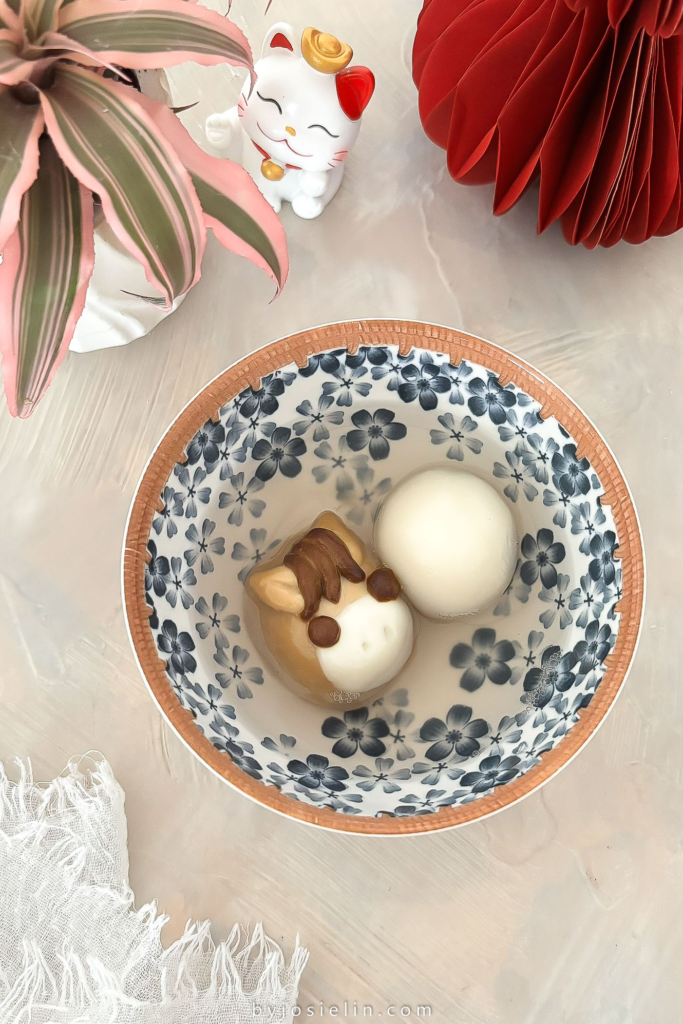
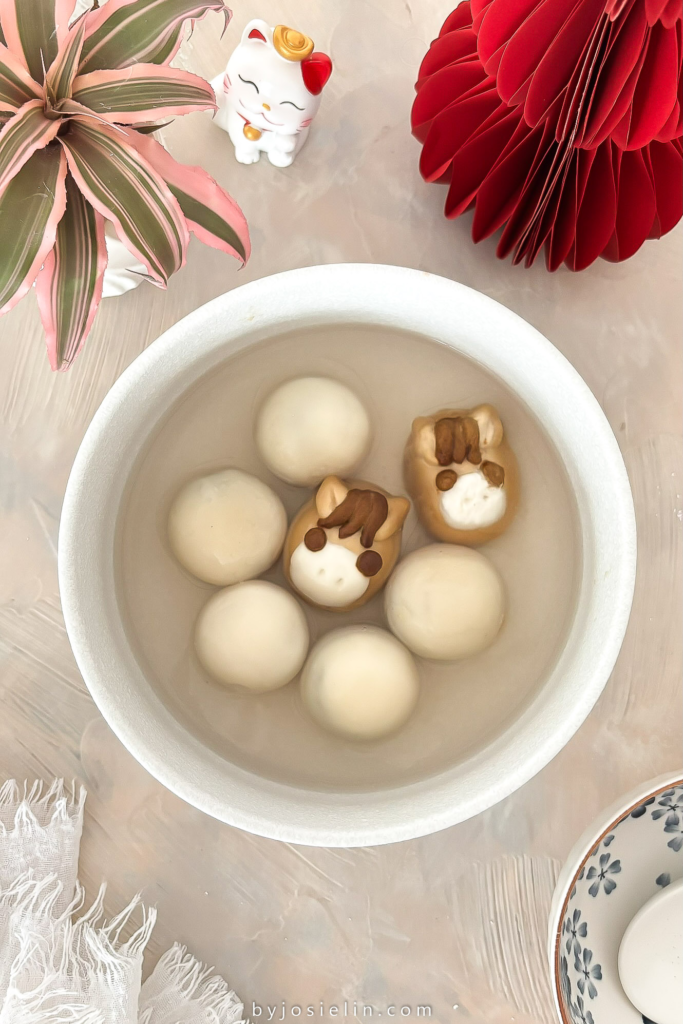
These soft and chewy red bean stuffed tang yuan (豆沙馅汤圆) are full of comforting layers of flavor! Subtly sweet, nutty, and earthy from the smooth red bean paste, all served in a lightly sweet ginger broth. Traditionally enjoyed during the Winter Solstice Festival (Dongzhi / 冬至) and the Lantern Festival (Yuanxiao Jie / 元宵节), tang yuan symbolize family unity and togetherness. While they hold deep cultural meaning during these celebrations, they also make a wonderfully cozy dessert any time of year! especially on a chilly day.
Growing up, I ate tang yuan, like a lot! Especially during the Winter Solstice Festival. My late grandma would invite all her children and grandchildren to her house to make tang yuan together. The kitchen would be crowded, messy, and a little chaotic, but it was always filled with laughter. Looking back now, those moments feel incredibly special and are some of my most cherished memories.
Tang yuan (汤圆), also known as yuan xiao (元宵), are chewy glutinous rice balls usually served in a warm, sweet broth. There are many different versions of tang yuan—some are stuffed with sweet paste and served in ginger broth, some are plain and eaten with sweet soups like red bean soup or black sesame soup, and there are even savory ones. I honestly love them all, but today I’m sharing a red bean stuffed tang yuan in ginger broth recipe.
WHY YOU’LL LOVE THESE RED BEAN STUFFED TANG YUAN
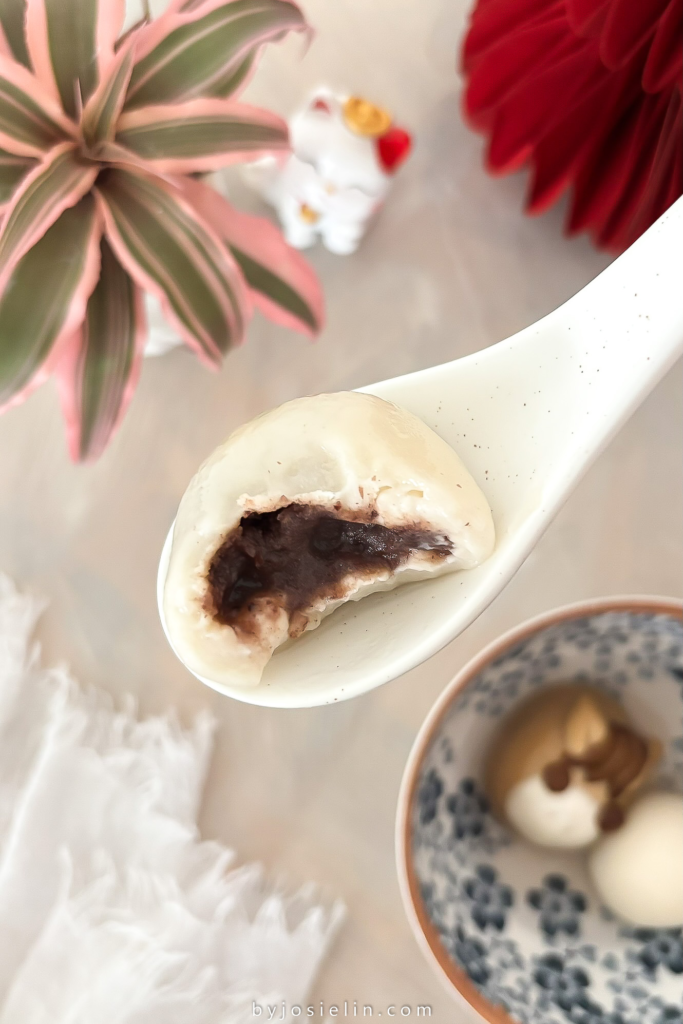
- Soft and chewy! The glutinous rice balls have that signature chewy, bouncy texture that makes tang yuan so comforting to eat.
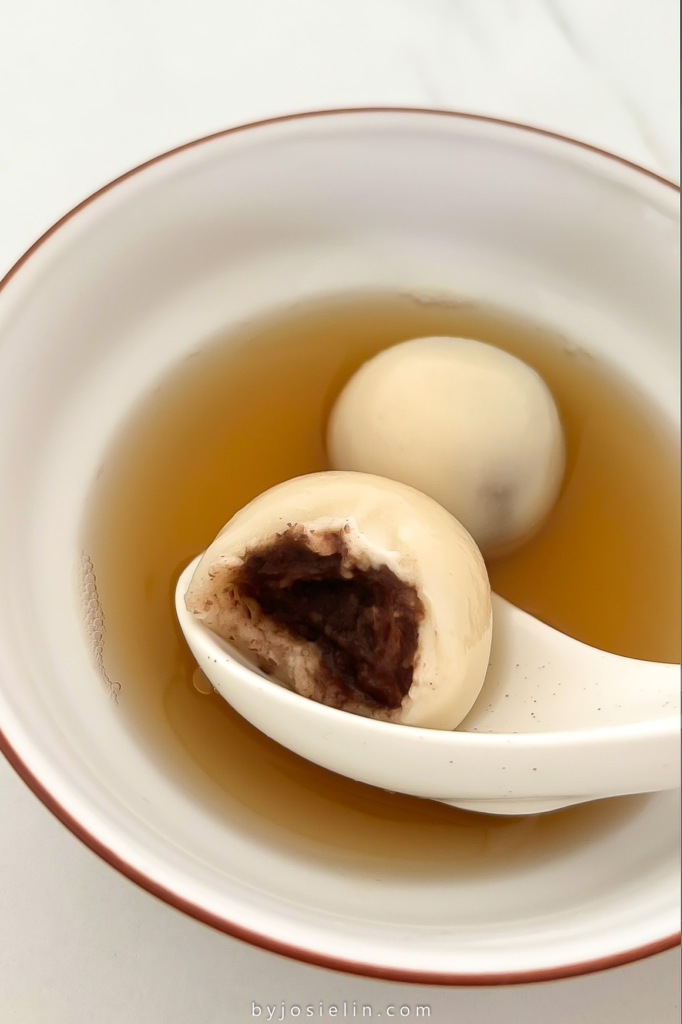
- Sweet, nutty red bean filling. The smooth red bean paste adds a gentle sweetness with a slightly earthy, nutty flavor that pairs perfectly with the soft dough.
- Warm and cozy ginger broth. The lightly sweet ginger soup adds warmth and a subtle spice that balances the sweetness of the filling beautifully.
- The perfect balance of flavors. Sweet and earthy flavors all come together in one comforting bowl.
- A dessert with meaning! Tang yuan symbolize family togetherness and unity, which makes them extra special to share with loved ones.
- Perfect for chilly days. A bowl of warm tang yuan in ginger broth is the ultimate cozy treat when the weather is cold.
- Great for making ahead! You can freeze the stuffed tang yuan and cook them straight from frozen whenever a craving hits.
INGREDIENTS NEEDED & NOTES
Adzuki beans – These small red beans are used to make the sweet red bean paste filling. Once cooked and sweetened, they become soft, creamy, and slightly nutty. Perfect for stuffing inside tang yuan.
Glutinous rice flour – This is the key ingredient for making the chewy tang yuan dough. When mixed with warm water, it forms a soft, pliable dough that cooks into the classic bouncy texture.
Ginger – Fresh ginger is used to make the warm ginger broth. It adds a gentle spice and warmth that balances the sweetness of the tang yuan.
Sugar – This recipe uses both brown sugar and granulated sugar to sweeten the red bean paste. For the ginger broth, you can use either brown sugar or granulated sugar, depending on your preference.
Salt – Just a small pinch helps balance the sweetness and enhances the flavor of the red bean paste.
Butter – A little butter is added to the red bean paste to make it smoother and richer.
Warm water – You’ll need warm, almost hot water to mix with the glutinous rice flour and form the tang yuan dough. This helps create a soft, smooth dough that’s easy to shape.
STEP-BY-STEP INSTRUCTIONS TO MAKE THESE RED BEAN STUFFED TANG YUAN
(Be sure to check the printable recipe card below)
Red Bean Paste:
100g (1/2 cup) adzuki beans
50g (1/4 cup) granulated sugar
55g (1/4 cup) brown sugar
1 pinch of salt
2 tablespoons unsalted butter
Dough:
210g (1+2/3 cups, spoon and level method) glutinous rice flour
240g (1 cup) almost hot water
Ginger Broth:
1.000 ml (4 cups) water
4-5 pieces fresh ginger
100g (1/2 cup) granulated sugar or brown sugar
STEP 1 – Prepare the Filling
Rinse the adzuki beans, then place them in a bowl and cover with water. Cover the bowl and let the beans soak overnight. The next day, drain and rinse them well.
Transfer the soaked beans to a medium saucepan and add enough water to fully cover them. Bring to a simmer and cook until the beans are very soft and easily mashable when pinched, about 2 hours. Add more water if needed during cooking to keep the beans submerged.
Drain the beans thoroughly, then transfer them to a food processor. Add the white sugar, dark brown sugar, salt, and unsalted butter. Blend on high speed until a smooth, fine paste forms, adding a small amount of water only if necessary to help it blend.
Transfer the red bean purée to a nonstick pan and cook over medium heat, stirring constantly to prevent burning. Continue cooking until the paste thickens slightly, darkens a bit, and holds its shape when stirred. Remove from the heat and let it cool completely. Keep in mind that the paste will continue to firm up as it cools, so try not to overcook it.
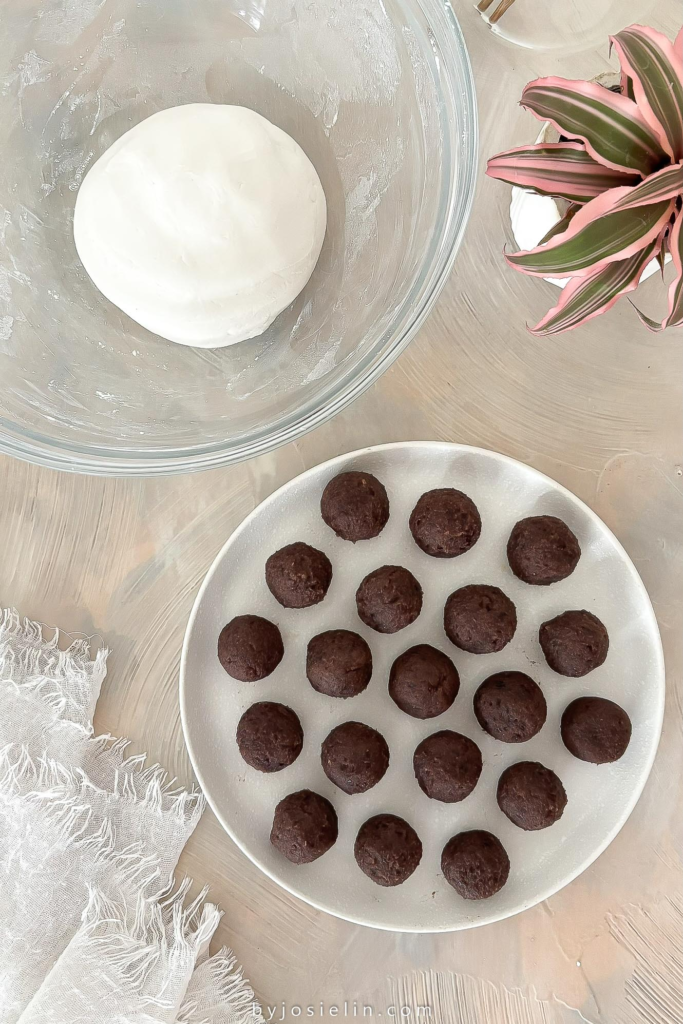
Once fully cooled, portion the paste into small balls, about 10g each, to use as the tang yuan filling. You’ll need about 22 balls. Cover with plastic wrap and chill in the fridge, at least 30 minutes.
STEP 2 – Make The Dough
Pour the glutinous rice flour into a large mixing bowl. Slowly pour in ½ cup boiling water while stirring with chopsticks or a spatula. Once it starts coming together, knead the dough with your hands until it becomes smooth and soft. If the dough feels too dry, add a little more warm water, a small amount at a time. The dough should be soft and slightly stretchy, but not so wet that it sticks to your hands or the bowl.
Divide the dough into 15 g portions (you should get about 22 pieces) and cover them with a damp towel to keep them from drying out. Try not to let the dough sit for too long, as it can dry out and make the wrapping process more difficult.
Glutinous rice flour needs heat to become pliable. If the dough becomes dry, dip your fingertips in warm water and gently knead the moisture into the portioned dough to soften it.
STEP 3 – Assembled the Tang Yuan
Flatten a piece of dough with your fingers to form a small round wrapper. Place a ball of filling in the center. Gently push the dough upward around the filling, wrapping it tightly, then pinch the top to seal completely. Make sure the tang yuan are well sealed, otherwise the filling may leak out during cooking.
Cover the finished tang yuan with plastic wrap or a damp towel while you assemble the rest to prevent them from drying out. Once all the tang yuan are assembled, you can cook them right away, or place them in a freezer-safe container (making sure they’re not sticking to each other) and freeze for up to 1 month.
STEP 4 – Cook the Tang Yuan and Make the Ginger Broth
Bring a pot of water to a boil. Drop the tang yuan into the boiling water and cook until they float to the surface. Once they float, remove them with a slotted spoon and transfer them to the prepared serving bowls. If needed, cook in batches, as the tang yuan expand while cooking—so be careful not to overcrowd the pot.
In another pot, combine 4 cups of water, ginger slices, and ½ cup sugar of your choice. Bring to a boil, then reduce to a simmer and cook for about 15 minutes to infuse the ginger flavor.
Pour the ginger broth over the tang yuan and enjoy warm!
TIPS FOR MAKING THE BEST RED BEAN STUFFED TANG YUAN
Prepare the filling ahead of time – Make the red bean paste first so it has time to cool and firm up before assembling. Chilled filling is much easier to roll and wrap.
Adjust the dough as needed – Glutinous rice dough can be a little sensitive, so don’t be afraid to adjust it. If it feels dry, knead in a little warm water. If it’s too sticky, add a small sprinkle of glutinous rice flour.
Keep the dough covered – Glutinous rice dough dries out quickly. Cover the dough and the assembled tang yuan with a damp towel while working to keep them soft and easy to shape.
Use food coloring for a fun look – You can divide the dough and color it with gel food coloring or natural ingredients like pandan juice, butterfly pea flower, purple sweet potato, or matcha powder for colorful tang yuan.
Make a big batch and freeze them – Tang yuan freeze really well! Arrange them in a single layer so they don’t stick together, freeze until solid, then store in a container. You can cook them straight from frozen whenever you’re craving a cozy bowl.
HERE’S HOW TO STORE THESE RED BEAN STUFFED TANG YUAN
Tang yuan are best enjoyed the same day they’re made. If you do have leftovers, store them in an airtight container in the refrigerator with the ginger broth. They’re best eaten within 1–2 days. They will harden when chilled, which is normal. When you’re ready to eat them, simply reheat them gently on the stove with the broth until warmed through and soft again.
Tang Yuan are great for making ahead, they keep well in the freezer for about 1-2 month if stored properly. After about 2 months, they’re still safe to eat but the dough can start to crack or lose its chewy texture, so they’re best enjoyed sooner. Here’s how to properly store the uncooked tang yuan:
- Arrange the assembled tang yuan in a single layer on a tray so they aren’t touching.
- Freeze until solid, about 1–2 hours. This prevents them from sticking together and keeps their shape.
- Transfer them to a freezer-safe bag or airtight container.
- When ready to cook, don’t thaw them! Just drop the frozen tang yuan directly into boiling water and cook until they float.
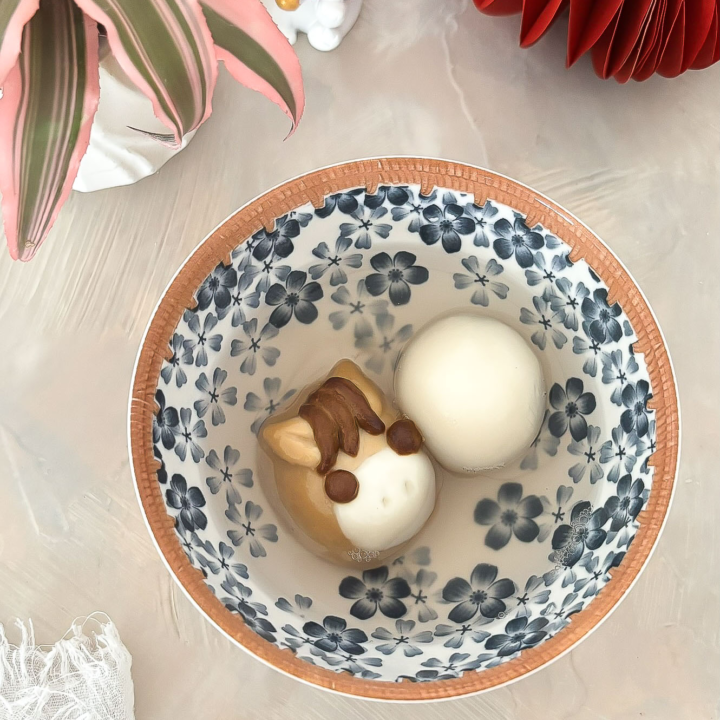
Red Bean Stuffed Tang Yuan (豆沙馅汤圆)
These soft and chewy red bean stuffed tang yuan (豆沙馅汤圆) are full of comforting layers of flavor! Subtly sweet, nutty, and earthy from the smooth red bean paste, all served in a lightly sweet ginger broth.
Ingredients
Red Bean Paste:
- 100g (1/2 cup) adzuki beans
- 50g (1/4 cup) granulated sugar
- 55g (1/4 cup) brown sugar
- 1 pinch of salt
- 2 tablespoons unsalted butter
Dough:
- 210g (1+2/3 cups, spoon and level method) glutinous rice flour
- 240g (1 cup) almost hot water
- food coloring, optional
Ginger Broth:
- 1.000 ml (4 cups) water
- 4-5 pieces fresh ginger
- 100g (1/2 cup) granulated sugar or brown sugar
Instructions
STEP 1 - Prepare the Filling
- Rinse the adzuki beans, then place them in a bowl and cover with water. Cover the bowl and let the beans soak overnight. The next day, drain and rinse them well.
- Transfer the soaked beans to a medium saucepan and add enough water to fully cover them. Bring to a simmer and cook until the beans are very soft and easily mashable when pinched, about 2 hours. Add more water if needed during cooking to keep the beans submerged.
- Drain the beans thoroughly, then transfer them to a food processor. Add the white sugar, brown sugar, salt, and unsalted butter. Blend on high speed until a smooth, fine paste forms, adding a small amount of water only if necessary to help it blend.
- Transfer the red bean purée to a nonstick pan and cook over medium heat, stirring constantly to prevent burning. Continue cooking until the paste thickens slightly, darkens a bit, and holds its shape when stirred.
- Remove from the heat and let it cool completely. Keep in mind that the paste will continue to firm up as it cools, so try not to overcook it.
- Once fully cooled, portion the paste into small balls, about 10g each, to use as the tang yuan filling. You’ll need about 22 balls. Cover with plastic wrap and chill in the fridge, at least 30 minutes.
STEP 2 - Make The Dough
- Pour the glutinous rice flour into a large mixing bowl. Slowly pour in ½ cup boiling water while stirring with chopsticks or a spatula. Once it starts coming together, knead the dough with your hands until it becomes smooth and soft.
- If the dough feels too dry, add a little more warm water, a small amount at a time. The dough should be soft and slightly stretchy, but not so wet that it sticks to your hands or the bowl.
- Divide the dough into 15 g portions (you should get about 22 pieces) and cover them with a damp towel to keep them from drying out. Try not to let the dough sit for too long, as it can dry out and make the wrapping process more difficult.
- Glutinous rice flour needs heat to become pliable. If the dough becomes dry, dip your fingertips in warm water and gently knead the moisture into the portioned dough to soften it.
STEP 3 - Assembled the Tang Yuan
- Flatten a piece of dough with your fingers to form a small round wrapper. Place a ball of filling in the center. Gently push the dough upward around the filling, wrapping it tightly, then pinch the top to seal completely.
- Make sure the tang yuan are well sealed, otherwise the filling may leak out during cooking.
- Cover the finished tang yuan with plastic wrap or a damp towel while you assemble the rest to prevent them from drying out.
- Once all the tang yuan are assembled, you can cook them right away, or place them in a freezer-safe container (making sure they’re not sticking to each other) and freeze for up to 1 month.
STEP 4 - Cook the Tang Yuan and Make the Ginger Broth
- Bring a pot of water to a boil. Drop the tang yuan into the boiling water and cook until they float to the surface.
- Once they float, remove them with a slotted spoon and transfer them to the prepared serving bowls. If needed, cook in batches, as the tang yuan expand while cooking—so be careful not to overcrowd the pot.
- In another pot, combine 4 cups of water, ginger slices, and ½ cup sugar of your choice. Bring to a boil, then reduce to a simmer and cook for about 15 minutes to infuse the ginger flavor.
- Pour the ginger broth over the tang yuan and enjoy warm!